Show-stopping road wheels that are practical enough for real riding
Words by Sam Challis
Photography by Lizzie Crabb
Staggered rim profiles are now commonplace in high-end wheels, and the rationale stacks up. As front and rear wheels are subject to different conditions, why should they be the same? The most recent school of thought is that the front rim should be deeper than the rear because, being the first bit of the bike to meet the wind, it has more opportunity to influence the relatively undisturbed air before it gets messy downstream. This is why we’ve seen such designs from the likes of Hunt and Roval.
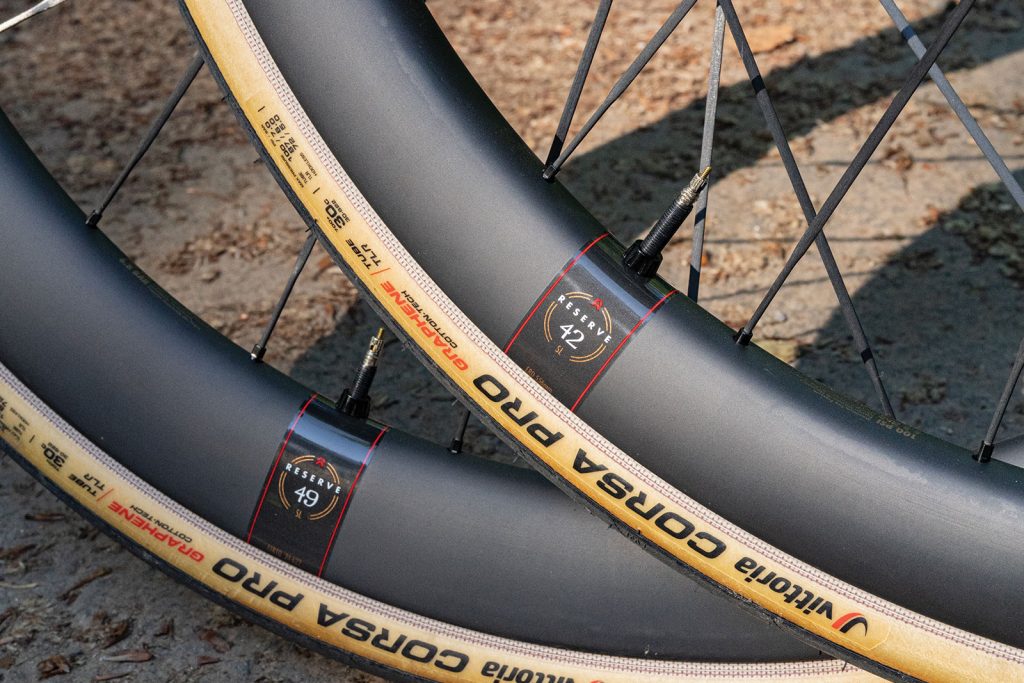
Reserve takes a different approach, arguing that the rear should be deeper, with the front shallower and wider to improve handling control, given that it’s more susceptible to sidewinds. It’s not just a theory; Reserve has some pretty valid data to back up its claim that this is the right way to do it.
Reserve dubs it the Turbulent Aero concept and says it spent two years travelling the roads of the US mapping different types of wind conditions via a moped fitted with pitot tubes and other wind data-collecting apparatus (Google ‘Reserve turbulent aero moped’ to see how mad it looks).
‘Big gains in aerodynamic efficiency have slowed down because everyone has refined designs based on certain test conditions – wind-tunnels producing laminar, or smooth, airflow,’ says Nic McRae, composite engineer at Reserve. ‘That’s not what you experience in reality, so we captured real airflow conditions and recreated them in a wind-tunnel to refine our products
to actually be efficient.’
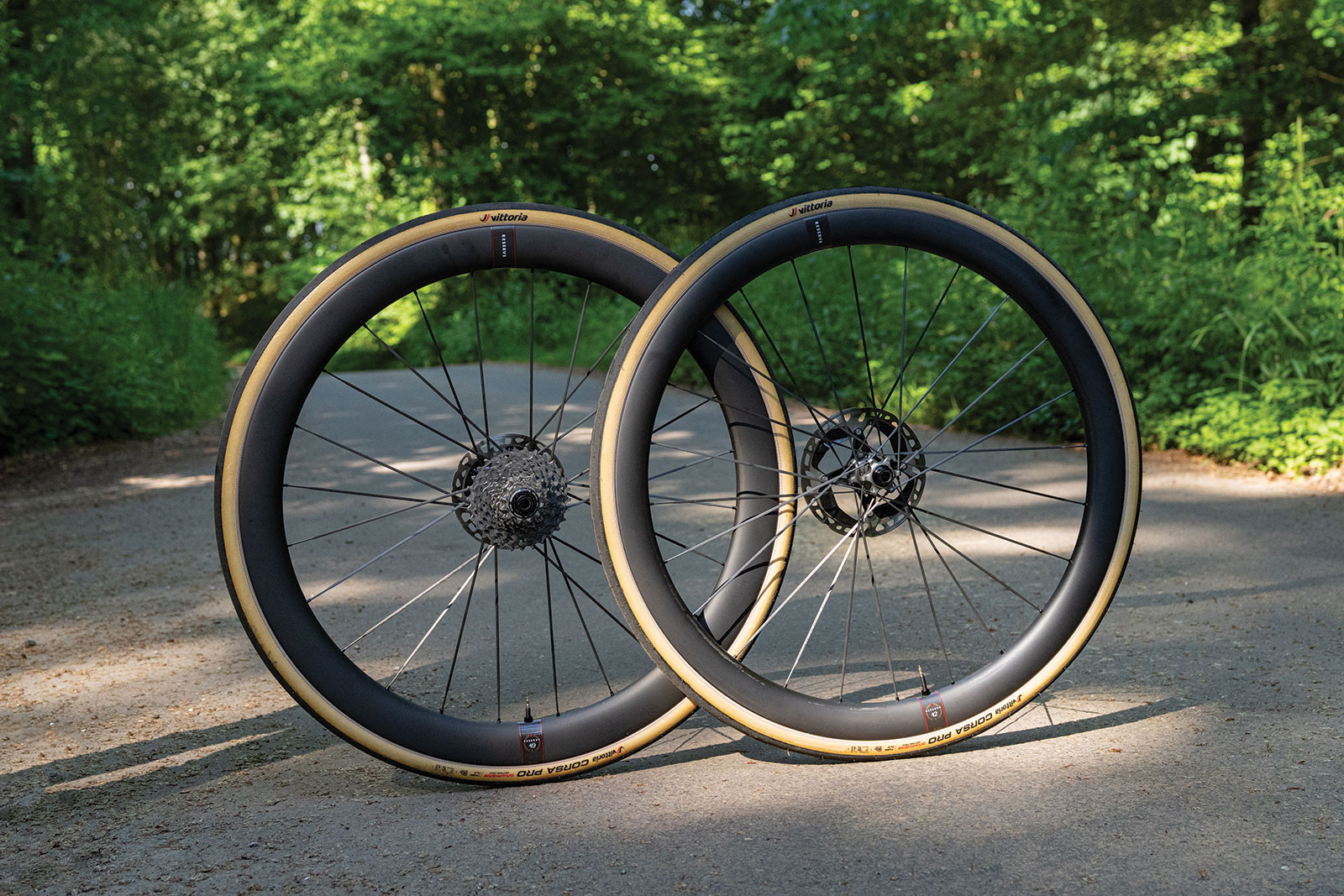
The result is a range of wheelsets with staggered depths: wider, shallower fronts married to deeper, narrower rears. The 42|49 option sits in the middle of the range, appropriately aimed at all-round riding rather than sprinting or climbing specifically. Pauline Ferrand-Prévot favoured them during her successful 2025 Tour de France Femmes campaign.
The theme of real-world usability continues into the rim widths, which are notably wide to allow smooth (and therefore aerodynamic) pairing with modern road tyre widths of 29mm and above. It’s the same for the supporting features: the rims are hooked so tyre compatibility isn’t a factor; there’s no rider weight limit and a lifetime warranty; plus spare spokes, an alternative freehub standard, posh Fillmore valves (see page 38) and machined lockrings are included in the box. It’s attention to detail at such a sensible level that it raises the question why everyone at this price point doesn’t offer this.
Not so reserved
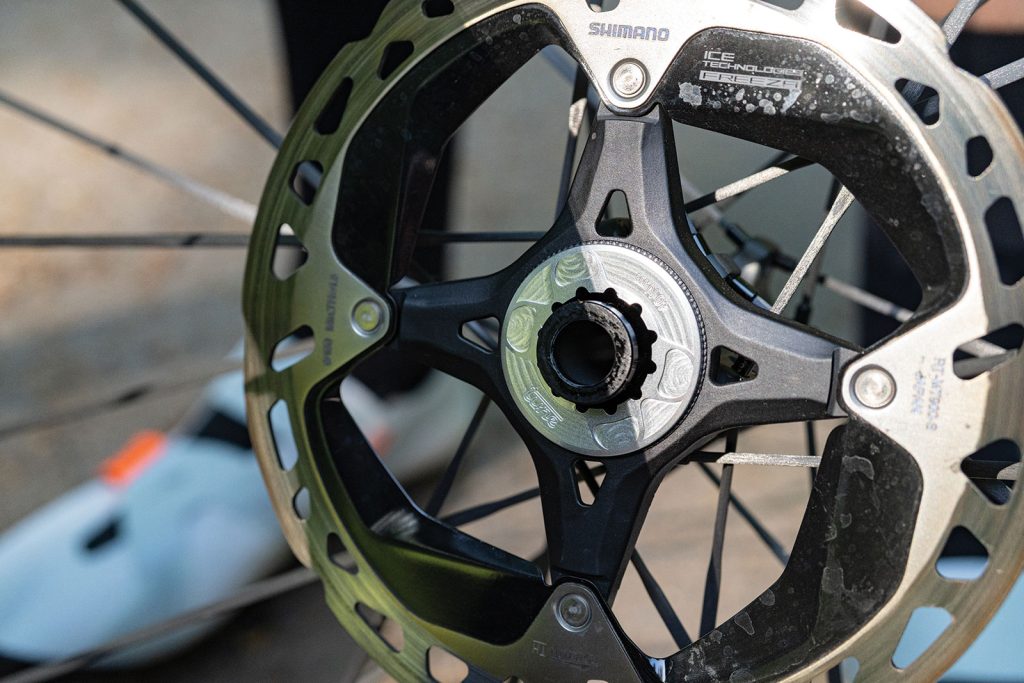
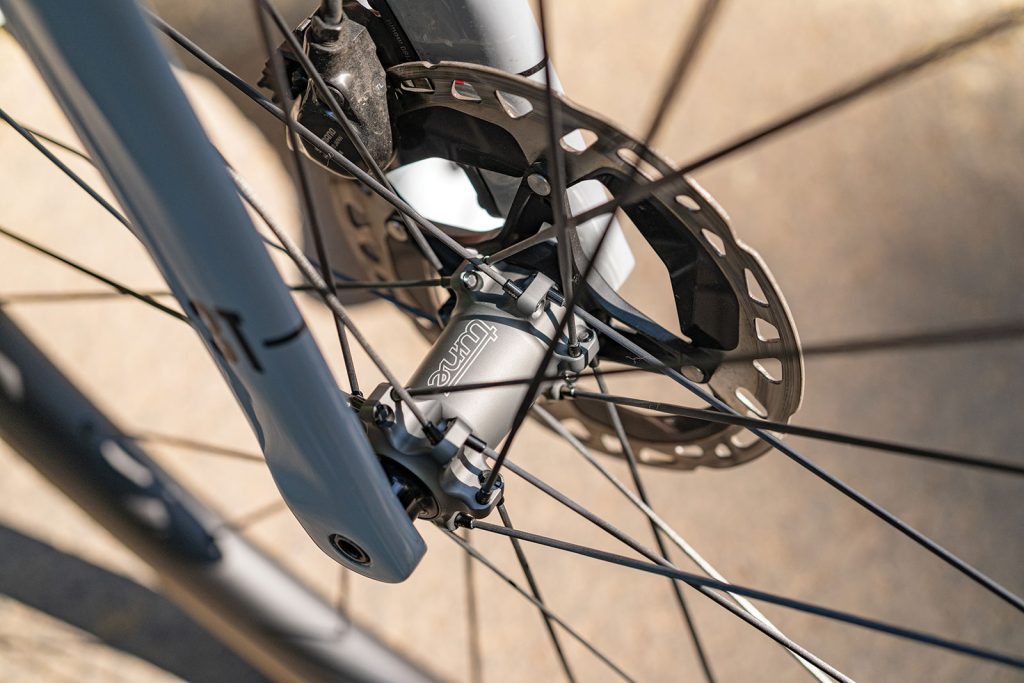
In other areas, though, the 42|49 SL TA wheels are anything but utilitarian. The rims use a fancy carbon layup compared to the non-SL versions of the wheels to save a claimed 60g; they’re laced to Vonoa’s Carbon spokes; and most exotically, Tune’s Pico hubs sit at the centre of the build.
‘Tune purpose-built these hubs for our rims,’ says McRae. ‘They are super-light and machined to align perfectly so the spokes don’t need to bend
or twist, creating a stiffer and stronger wheel.’
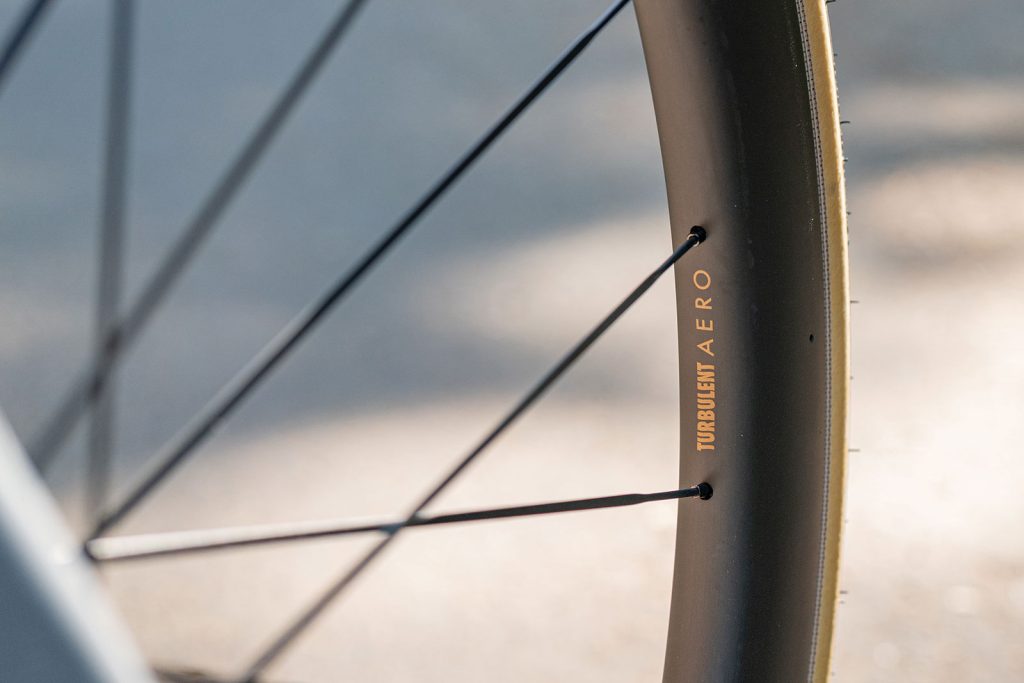
The 1,319g weight I measured the wheels at with valves and lockrings installed is pretty much the lightest you’ll find in this category, and the wheels accelerated as electrically as that weight suggests they might. An important factor here is the number of spokes in the build: 24/24 is a relatively high count for carbon spokes in a modern wheelset (Hunt’s 5AM wheelset uses a 15/18 count). Presumably a consequence of this in combination with the optimised spoke paths created by the Pico hubs is a very stiff feeling. This worked with the light weight to offer the sense that all power was being transmitted directly into the road. I’d say the wheels would add an extra bit of zing to any bike they’re fitted into.
This did come with the caveat of needing to be precise with pressures, however. I initially set my tyres on the high side and the result was an increased transmission of vibrations that got wearing pretty quickly. Thankfully, the rims’ wide internal width properly supported the carcass of the 30mm tyres I used, so I could drop the pressure to improve comfort and grip without inducing any tyre squirm under hard cornering.
After that the wheels rode as well as any I’ve used. While I couldn’t say if their Turbulent Aero shaping directly affected the speeds I could maintain versus similar rivals (it’s generally accepted most wheels at similar depths are within a few watts of each other), the front wheel did feel predictable and easy to handle in crosswinds, which while not faster per se does help in the speed stakes via increased confidence in handling.
As a money-no-object purchase, I’d have a hard job to look beyond these wheels. They offer the complete set of modern features with pragmatic accessories and supporting care, with enough bling to set them apart from similarly priced rivals.
As money is almost always an object, however, Reserve offers three other 42|49 rim builds that start from $2,199. Importantly, they scale back in exotica – think less opulent hubs and steel spokes – rather than core features, so users still get most of the performance at nearly half the cost. The result should make the Reserve 42|49 wheels a valuable upgrade whatever the budget.
The spec
Model Reserve 42|49 SL TA
Price $5,299
Weight 1,319g
Rim depth 42mm front, 49mm rear
Rim width 25.4mm internal, 34.4mm external front; 24.8mm internal, 32.1mm external rear
Hookless No
Spoke type Vonoa Carbon
Spoke count 24 front/24 rear
Hubset Tune Pico
Freehub options Sram XDr, Shimano HG
More info reservewheels.com