Looking back on Cadel Evans’ historic Tour victory
Words by Imogen Smith
Images by Graham Watson
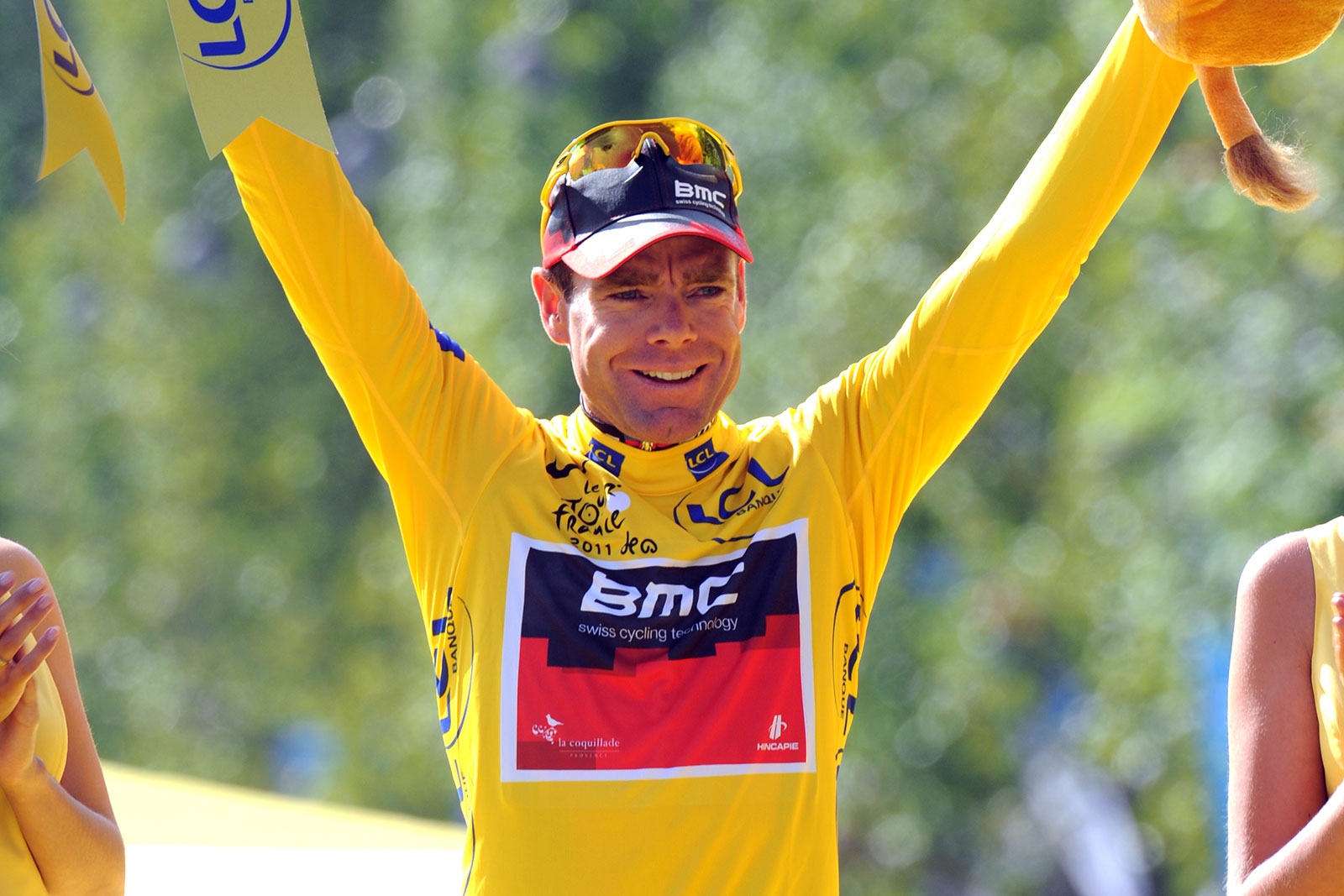
Fifteen years ago, Cadel Evans rolled down the Champs-Élysées in yellow and became the first Australian to win the Tour de France. It had taken him two second places, years of near misses and one final time trial in Grenoble, where he seized back Andy Schleck’s advantage and all but sealed the race.
To mark the anniversary, we caught up with Evans to talk about the Tour that changed his life, the moments that still stay with him and what that win meant for Australian cycling.
Cyclist: Fifteen years on, when you think back to Paris in 2011, what do you now understand about that victory that you could not have understood in the moment?
Cadel Evans: In the moment I thought it might change my life, but I certainly didn’t expect it to change my life as much as it has, and for so long. I had no idea so many people around the world watched the Tour de France. Even now, after all these years, probably most days of my life someone says something to me about the 2011 Tour.
Cyc: Is there any part of that Tour win that has been misremembered over time? Anything people celebrate now that misses the real story as you see it?
CE: There are probably quite a few aspects from the 2011 Tour that are misremembered for me but, mostly, I was not a favourite to win. I recall a friend of mine putting a bet on me after Tirreno-Adriatico when I was at 28-1 odds. I am not a betting person, especially on myself, but I thought that was a good investment.
At the Tour, people, or the media at least, seem to only remember your performance from the previous year, and for me, 2010 was the one that really got away, even more so than the near misses in ’07 and ’08. Going into the 2011 Tour, I could see the confidence within the team building with every good result we achieved in the build-up to July.
Cyc: If an Australian rider asked you today what a Tour victory really costs, what would you tell them that the public still does not see?
CE: If one person says you can win the Tour, be prepared to deal with 999 people telling you cannot win the Tour and that you are an idiot for trying. For me, the Tour dream started when I watched Miguel Induráin win his first Tour in 1991, 20 years previously. The physical effort was not easy but, looking back, lacking self-motivation and self-belief is what would derail most people.
Cyc: When you revisit that period, what do you remember most about the Tour itself – particular stages, or decisive moments?
CE: There are lot of great memories about that year’s Tour, of course the big moments in the race among them, but for me it was more the conversations we had within the team. The little things that were said between, say, George Hincapie and myself that led to race-winning moments. The look of confidence Manuel Quinziato gave me before he headed off for his TT in Grenoble. Steve Morabito always being there when he was needed most. Brent Bookwalter’s and Marcus Burghardt’s commitment to the cause. George buying 15 pizzas on the Champs so we could have our quiet little celebration together.
The team hug on the finish line in Paris was probably representative of this quiet but very strong unity we had amongst ourselves. That is when it was seen on TV as well.
Cyc: When you watch the Tour now, what feels most unfamiliar to the rider you were then? What feels familiar?
CE: Almost everything feels familiar to me. Some of the smaller details change, obviously most of the names and faces change. The roadside feeding, post-race recovery and riding rollers have changed. The riders wearing their helmets in interviews is a change I am glad not to be a part of, but the fundamentals have remained the same.
Cyc: Your career was marked by toughness and patience and was built over a long timeframe, relatively speaking, to win the tour at 34 years of age. In an era now obsessed with precocity and the next big thing, often focusing on very young riders, do you think there is still room in the sport for the kind of late-building, hard-earned trajectory that defined your success?
CE: As I came from MTB, my start at the Tour came much later, at 28 years of age, against Lance Armstrong. While the late start aided my longevity in the sport, it was the changes cycling went through that gave me my opportunity to fight for the wins, especially in the period from 2010 onwards.
As the sport has continued to evolve, we have this wave of extremely talented and dedicated young riders fighting for the win. The dedication and concentration the sport now requires will limit the longevity of current riders.
Cyc: If you strip away the mythology and the headlines, what do you think your 2011 Tour victory meant for Australian cycling structurally, culturally, and in terms of how Europe looked at riders coming out of Australia?
CE: I would like to think that after Greg LeMond and Lance Armstrong, I helped to bring the Tour to the Anglophone world. Obviously Brad Wiggins and Chris Froome continued that run.
Within Australia, I feel as though people really appreciated my persistence and tenacity. While I was racing, I was focused on the task at hand. I did not realise the following I had from here at home. I never felt pressure or unrealistic expectations from Australia, more: we are here on the adventure with you.
Of course, when we arrived, we were all very happy. That was, and still is, an ideal ambience to have around you.
I have been stopped in the street many, many times, especially by older ladies saying, I am happy that you won but I am really happy that you did not give up. Thank you. For me, that is a compliment to my efforts greater than most.